
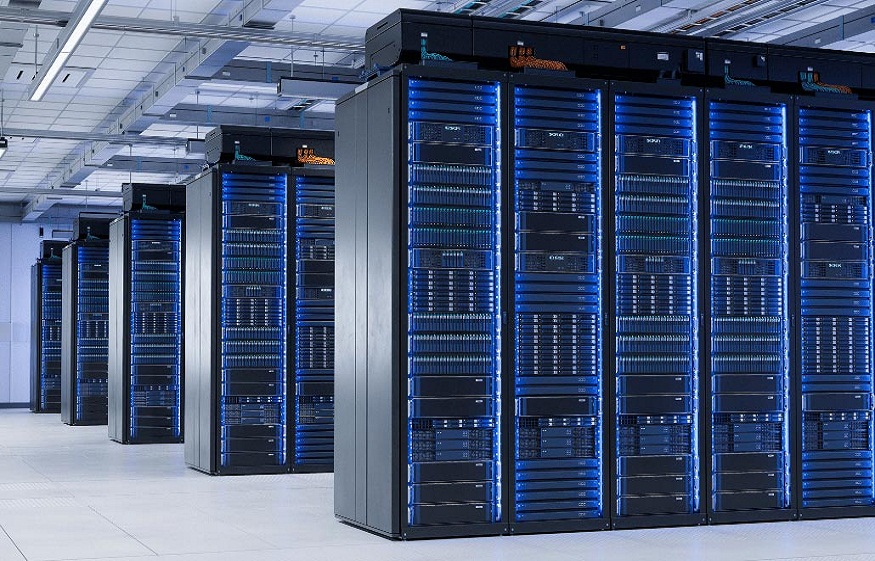
GPU Clusters at Scale are no longer a niche requirement reserved for research labs or hyperscalers. Today, they form the backbone of modern AI, machine learning, deep learning, and high-performance computing workloads across startups, enterprises, and cloud-native organizations. As models grow larger, datasets expand, and training cycles become more complex, the ability to deploy and manage GPU clusters at scale has become a strategic advantage rather than a technical luxury.
Organizations working with large language models, computer vision, recommendation systems, or real-time analytics quickly realize that single-GPU or small multi-GPU setups cannot keep up with production demands. This is where well-architected GPU clusters at scale come into play, offering distributed compute power, fault tolerance, and the flexibility required to support both training and inference at enterprise level.
Understanding GPU Clusters at Scale
GPU clusters at scale refer to interconnected groups of GPU-powered servers designed to work together as a unified compute environment. These clusters distribute workloads across multiple nodes, allowing parallel processing of massive datasets and complex models. Unlike traditional CPU clusters, GPU clusters are optimized for highly parallel tasks such as matrix multiplication, neural network training, and large-batch inference.
At scale, this setup involves more than simply adding GPUs. It requires careful coordination of networking, storage, scheduling, orchestration, and monitoring systems to ensure optimal performance and resource utilization. The goal is to create an environment where workloads scale seamlessly without introducing bottlenecks or operational overhead.
Why GPU Clusters at Scale Matter for AI and ML
Modern AI workloads are both compute-intensive and time-sensitive. Training a large model on insufficient infrastructure can take weeks or months, delaying deployment and increasing costs. GPU clusters at scale drastically reduce training time by enabling distributed training across dozens or hundreds of GPUs.
Beyond speed, scalability ensures consistency and reliability. When clusters are properly designed, teams can run multiple experiments in parallel, allocate resources dynamically, and support production inference without interrupting training jobs. This flexibility is critical for organizations operating in fast-moving markets where iteration speed directly impacts competitiveness.
Key Components of GPU Clusters at Scale
A successful GPU cluster at scale is built on several foundational components working together.
High-performance GPUs form the core, often including data center-grade accelerators optimized for AI workloads. These GPUs are connected through low-latency, high-bandwidth networking to ensure efficient data transfer between nodes.
Networking plays a critical role, as poor interconnects can negate the benefits of adding more GPUs. High-speed fabrics allow distributed workloads to synchronize efficiently, especially during large model training.
Storage systems must also scale alongside compute. Large datasets require fast access and high throughput, making distributed storage or parallel file systems essential for maintaining performance.
Finally, orchestration and scheduling layers manage workload distribution. Platforms such as container orchestration systems help allocate GPUs efficiently, prevent resource contention, and automate scaling based on demand.
Challenges of Running GPU Clusters at Scale
While the benefits are significant, GPU clusters at scale introduce unique challenges. Resource fragmentation is a common issue, where GPUs remain underutilized due to poor scheduling or mismatched workloads. Without intelligent orchestration, clusters can become expensive yet inefficient.
Operational complexity is another concern. Managing firmware, drivers, libraries, and dependencies across hundreds of nodes requires strong automation and standardization. Even minor inconsistencies can lead to performance degradation or job failures.
Cost management is also critical. GPUs are high-value assets, and inefficient usage quickly leads to inflated infrastructure expenses. Organizations must balance performance requirements with budget constraints while maintaining predictable operational costs.
Best Practices for Scaling GPU Clusters
To maximize ROI, GPU clusters at scale should be designed with scalability and efficiency in mind from the outset. Standardizing hardware configurations simplifies maintenance and reduces compatibility issues. Consistent node designs also make scaling predictable and easier to automate.
Workload isolation is another important practice. Separating training, inference, and experimentation environments prevents resource contention and improves reliability. Intelligent scheduling ensures that high-priority jobs receive appropriate resources without starving other workloads.
Monitoring and observability should be embedded into the cluster architecture. Real-time insights into GPU utilization, memory usage, and network throughput allow teams to identify inefficiencies early and continuously optimize performance.
On-Premise vs Cloud GPU Clusters at Scale
Organizations must decide whether to build GPU clusters at scale on-premise, in the cloud, or using a hybrid approach. On-premise clusters offer greater control and predictable long-term costs but require significant upfront investment and operational expertise.
Cloud-based GPU clusters provide flexibility and rapid scaling, making them ideal for bursty workloads or early-stage experimentation. However, costs can escalate quickly if resources are not managed carefully.
Hybrid models combine the best of both approaches, allowing organizations to run baseline workloads on-premise while leveraging the cloud for peak demand or specialized tasks. This approach offers cost efficiency without sacrificing scalability.
The Future of GPU Clusters at Scale
As AI models continue to grow in size and complexity, GPU clusters at scale will become even more critical. Advances in networking, accelerators, and orchestration software are making it easier to deploy larger clusters with greater efficiency. Automation and AI-driven resource management will further reduce operational overhead while improving utilization.
Organizations that invest early in scalable GPU infrastructure position themselves to innovate faster, deploy smarter models, and respond quickly to market demands. GPU clusters at scale are not just an infrastructure choice, but a foundational element of modern AI strategy.
Final Thoughts
GPU Clusters at Scale represent the next evolution of high-performance computing for AI-driven organizations. When designed thoughtfully, they unlock faster training, reliable inference, and the flexibility needed to support continuous innovation. By focusing on scalable architecture, efficient resource management, and long-term cost optimization, businesses can turn GPU infrastructure into a powerful competitive advantage rather than an operational burden.