
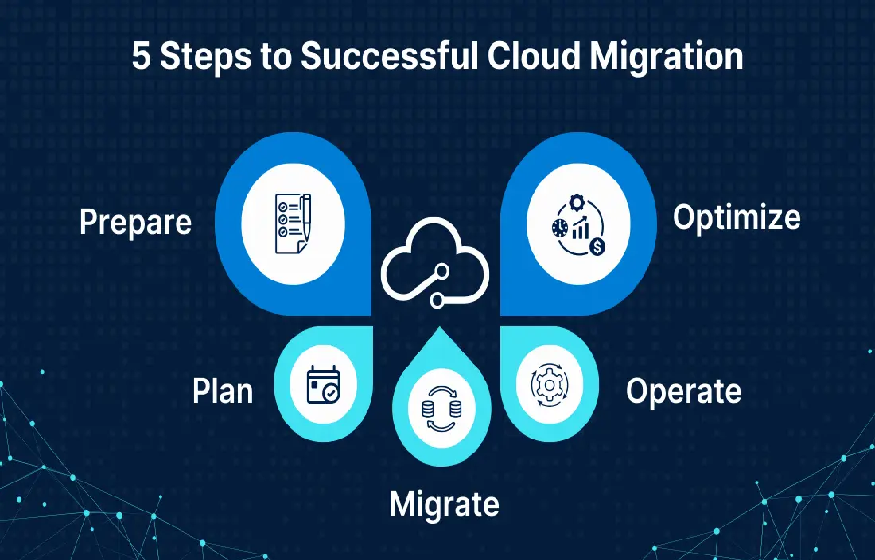
In today’s fast-moving digital landscape, moving to the cloud is no longer a question of if—it’s a question of how. Organizations that rush into the cloud without a clear plan often face cost overruns, security gaps, and operational disruptions. That’s where a Cloud Migration Strategy becomes essential.
This blog will walk you through what a cloud migration strategy really is, why it matters, and how to build one that delivers long-term value—not short-term headaches.
What Is a Cloud Migration Strategy?
A Cloud Migration Strategy is a structured plan that defines how applications, data, and workloads move from on-premises infrastructure to the cloud. It aligns business goals, technical requirements, security controls, and cost management into a single roadmap.
Rather than treating migration as a lift-and-shift exercise, a solid strategy ensures that every workload moves for the right reason and in the right way.
Why a Cloud Migration Strategy Is Critical
Without a clear strategy, cloud migration can quickly become expensive and risky. A well-defined approach helps organizations:
- Reduce operational and infrastructure costs
- Improve scalability and performance
- Strengthen security and compliance
- Minimize downtime during migration
- Maximize return on cloud investment
Simply put, strategy separates cloud success from cloud chaos.
The 6 Core Pillars of an Effective Cloud Migration Strategy
1. Define Clear Business Objectives
Start with why. Are you migrating to reduce costs, improve agility, modernize applications, or enhance disaster recovery?
Your cloud migration strategy should directly support business outcomes such as:
- Faster time to market
- Improved customer experience
- Better data insights
- Increased operational resilience
When objectives are clear, technical decisions become much easier.
2. Assess Your Current Environment
Before migrating anything, you need a full understanding of your existing infrastructure. This includes:
- Applications and dependencies
- Data volumes and sensitivity
- Performance requirements
- Compliance and regulatory needs
A detailed assessment helps identify which workloads are cloud-ready and which require refactoring or modernization.
3. Choose the Right Migration Approach
Not all applications should be migrated the same way. Most cloud migration strategies use a mix of approaches, including:
- Rehost (Lift and Shift): Fast but limited optimization
- Refactor: Modify applications to leverage cloud-native features
- Replatform: Optimize without major code changes
- Retire: Eliminate unused or redundant systems
- Retain: Keep certain workloads on-premises
Choosing the right approach for each workload reduces risk and controls cost.
4. Build Security and Compliance In from Day One
Security should never be an afterthought in your cloud migration strategy. Instead, it must be embedded into every phase.
Key considerations include:
- Identity and access management
- Data encryption at rest and in transit
- Compliance with industry regulations
- Continuous monitoring and threat detection
A “secure-by-design” approach ensures your cloud environment is resilient and trustworthy.
5. Plan for Cost Optimization and Governance
One of the biggest misconceptions about cloud is that it automatically saves money. Without governance, cloud costs can spiral quickly.
An effective cloud migration strategy includes:
- Budget forecasting and cost modeling
- Resource tagging and usage tracking
- Automated scaling and shutdown policies
- Ongoing optimization reviews
Cost control isn’t a one-time task—it’s a continuous discipline.
6. Prepare Your People and Processes
Technology alone doesn’t drive successful cloud adoption—people do.
Your strategy should include:
- Training teams on cloud tools and best practices
- Updating operating models and workflows
- Establishing clear ownership and accountability
When teams are empowered, the cloud becomes a growth engine instead of a bottleneck.
Common Cloud Migration Mistakes to Avoid
Even with good intentions, many organizations fall into the same traps:
- Migrating everything at once
- Ignoring application dependencies
- Underestimating security complexity
- Failing to optimize post-migration
- Treating migration as a one-time project
A thoughtful cloud migration strategy helps avoid these pitfalls and keeps your transformation on track.
Cloud Migration Is a Journey, Not a Destination
Successful cloud migration doesn’t end when workloads are moved. Continuous improvement, optimization, and modernization are what unlock the real value of the cloud.
With the right strategy, cloud migration becomes a foundation for innovation, resilience, and long-term growth.