
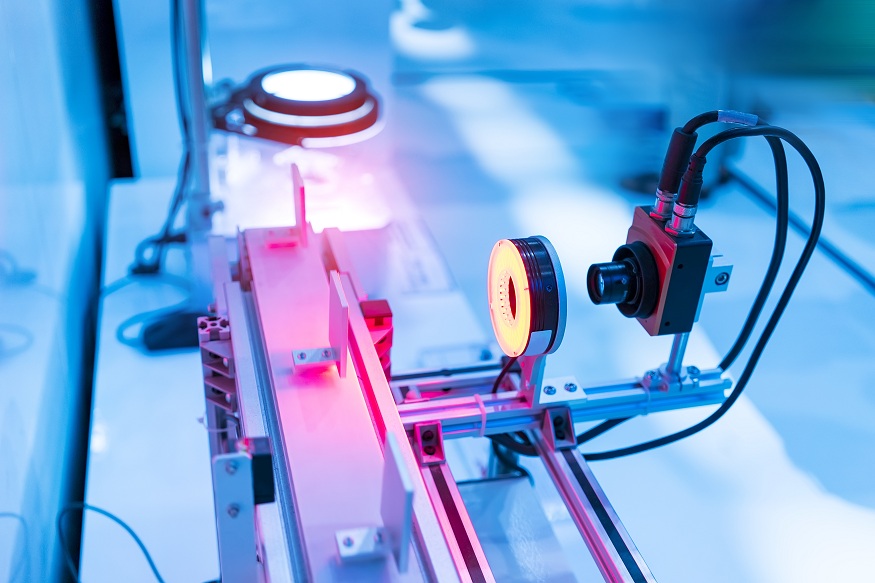
Visual inspection systems have become a critical component of modern manufacturing and industrial quality control. As industries move toward automation and zero-defect production goals, relying on manual inspection alone is no longer practical or scalable. Visual inspection systems combine advanced imaging, sensors, and intelligent software to detect defects, inconsistencies, and deviations with speed and precision that far exceed human capabilities.
Understanding Visual Inspection Systems
Visual inspection systems are automated solutions designed to analyze products, components, or materials using cameras and image-processing technology. These systems inspect items in real time, ensuring that every unit meets predefined quality standards before moving further down the production line.
Unlike traditional manual inspection, visual inspection systems operate continuously without fatigue, maintaining consistent accuracy regardless of volume or complexity. They are widely used across industries such as manufacturing, electronics, automotive, pharmaceuticals, food and beverage, and packaging.
How Visual Inspection Systems Work
At their core, visual inspection systems rely on a combination of hardware and software working together seamlessly.
High-resolution cameras capture images or video of products as they move through the inspection area. Lighting systems ensure consistent illumination, which is crucial for accurate image analysis. The captured images are then processed using algorithms or machine vision software that compares them against predefined parameters or reference models.
When deviations such as cracks, missing components, surface defects, incorrect labeling, or dimensional inaccuracies are detected, the system flags the issue or automatically removes the defective item from the production line.
Key Components of Visual Inspection Systems
Visual inspection systems are made up of several essential components that determine their performance and reliability.
Cameras are responsible for image capture and may vary from standard 2D cameras to advanced 3D or multispectral cameras depending on inspection requirements.
Lighting plays a vital role in eliminating shadows and highlighting defects. Different lighting techniques are used based on surface texture and material type.
Image processing software analyzes captured images using rule-based logic or artificial intelligence to identify defects or variations.
Controllers and interfaces allow operators to configure inspection parameters, monitor performance, and integrate the system with existing production infrastructure.
Types of Visual Inspection Systems
There are multiple types of visual inspection systems, each suited to different applications and environments.
2D visual inspection systems are commonly used for surface inspection, label verification, and presence or absence checks.
3D visual inspection systems analyze depth, height, and volume, making them ideal for dimensional accuracy and complex assemblies.
AI-powered visual inspection systems leverage machine learning to detect subtle defects and adapt to variations that traditional rule-based systems may miss.
Inline inspection systems operate directly on production lines, enabling real-time quality control without slowing operations.
Offline inspection systems are used for batch analysis or post-production quality checks.
Benefits of Implementing Visual Inspection Systems
One of the biggest advantages of visual inspection systems is consistency. Unlike human inspectors, automated systems apply the same inspection criteria uniformly across all products.
Accuracy is another major benefit. Advanced imaging and AI-driven analysis enable detection of defects that may be invisible to the human eye.
Visual inspection systems also improve production efficiency by reducing rework, minimizing waste, and preventing defective products from reaching customers.
Cost savings are realized over time through reduced labor dependency, fewer recalls, and improved operational efficiency.
Additionally, these systems support compliance with industry regulations by providing traceable inspection data and quality documentation.
Applications Across Industries
Visual inspection systems are widely adopted across various industries due to their versatility and reliability.
In manufacturing, they ensure part integrity, dimensional accuracy, and surface quality.
In electronics, they inspect printed circuit boards, solder joints, and component placement with extreme precision.
In pharmaceuticals, visual inspection systems verify packaging integrity, labeling accuracy, and contamination-free products.
In food and beverage industries, they help detect foreign objects, packaging defects, and improper sealing.
In automotive production, these systems are essential for inspecting critical components where safety and performance are non-negotiable.
Challenges and Considerations
While visual inspection systems offer numerous advantages, proper implementation requires careful planning.
Lighting conditions must be optimized to avoid false positives or missed defects.
System calibration and maintenance are essential to maintain accuracy over time.
AI-based systems require quality training data to perform effectively, and initial setup may involve higher investment.
Integration with existing production lines and software infrastructure must be carefully managed to ensure smooth operation.
Future of Visual Inspection Systems
The future of visual inspection systems is closely tied to advancements in artificial intelligence, deep learning, and industrial automation.
AI-driven systems are becoming more adaptive, capable of learning new defect patterns without extensive reprogramming.
Edge computing is enabling faster processing directly on the factory floor, reducing latency and reliance on centralized systems.
Integration with Industry 4.0 initiatives allows visual inspection systems to provide actionable insights, predictive analytics, and real-time quality monitoring.
As manufacturing continues to evolve, visual inspection systems will play an even more central role in achieving smart, efficient, and defect-free production.
Final Thoughts
Visual inspection systems are no longer optional for businesses aiming to remain competitive in today’s precision-driven industrial landscape. They deliver unmatched accuracy, consistency, and efficiency while supporting scalability and regulatory compliance.
By investing in the right visual inspection systems and aligning them with operational goals, organizations can significantly improve product quality, reduce costs, and strengthen customer trust. As technology